Thermal Arcade
Product Design
Manufacturing
Electronics
Coding
Timeline
Oct. - Dec. 2025
Team
Gloria Zhu
Role
Design
3D Modeling
Fabrication
Tools
Formlabs Resin Printer
Metal Lasercutter
OnShape
[ 01 ] Context & Concept
[ 01 ] Context & Concept
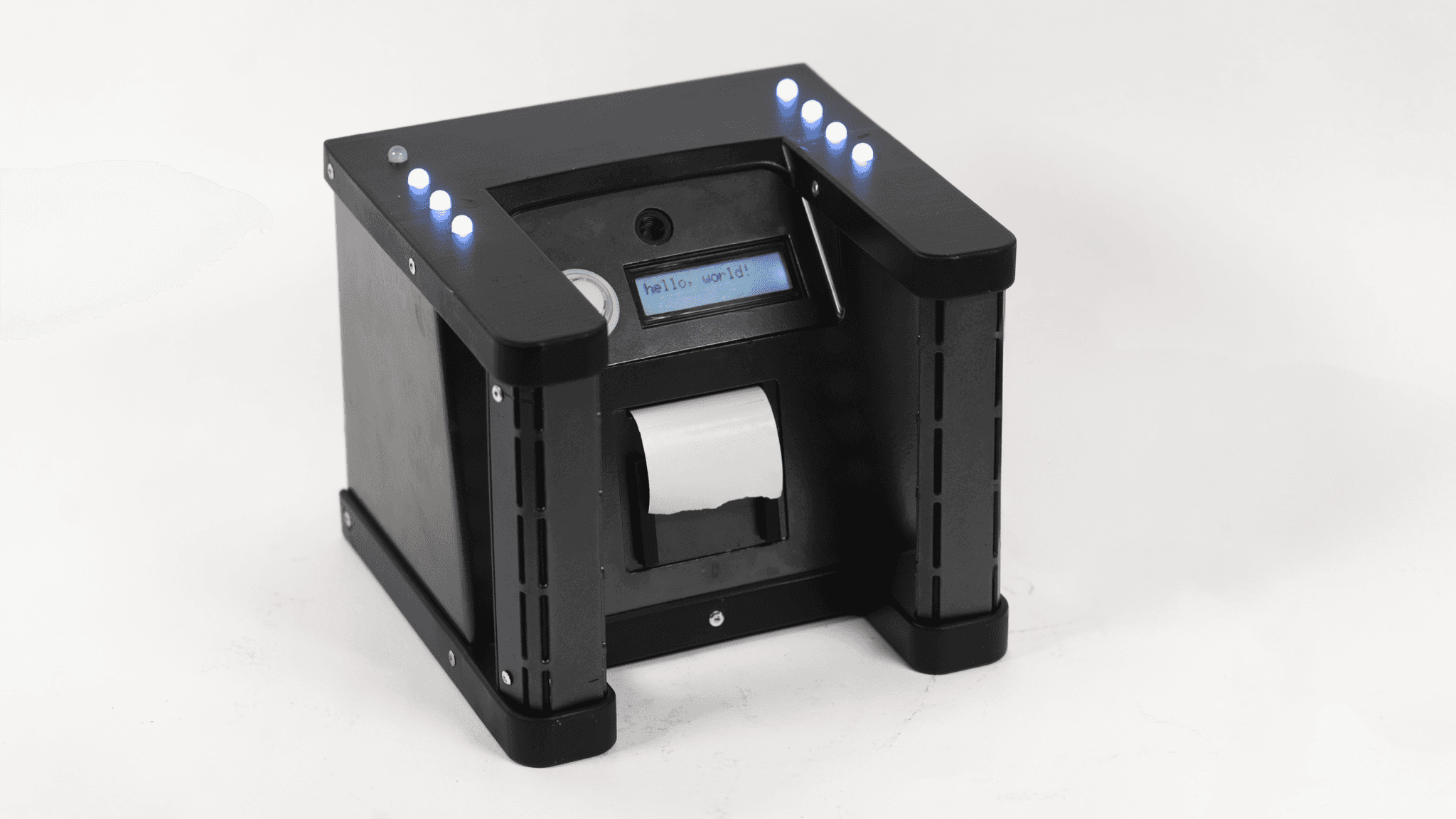
Made in MIT's 4.031, Objects & Interaction, instructed by Marcelo Coelho, this project is a response to the prompt of creating a playful or novel digital camera experience. In an era of instant, perfect digital photography, "Thermal Arcade" reverses expectations by requiring effort and challenging the user to earn their image.
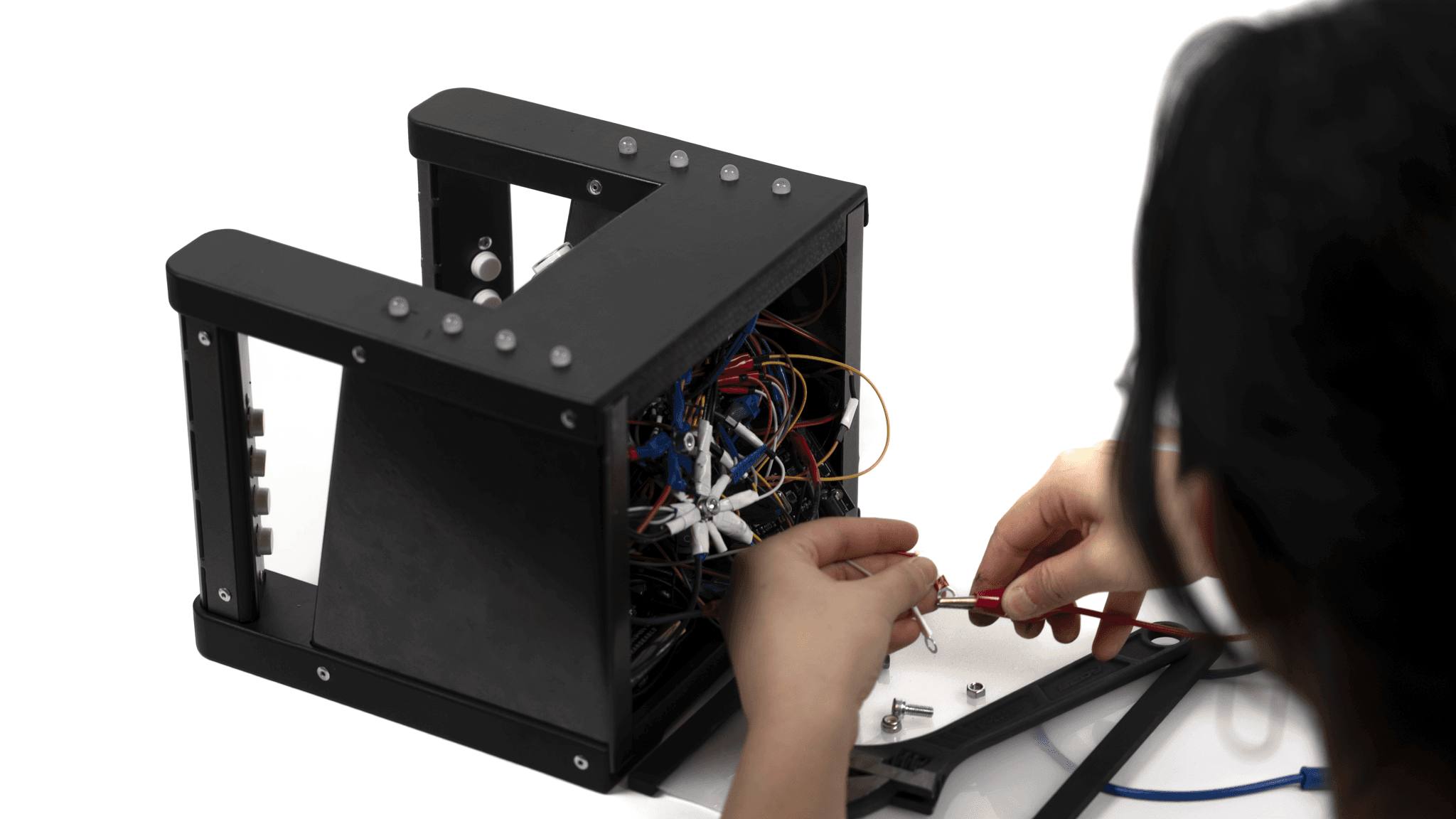
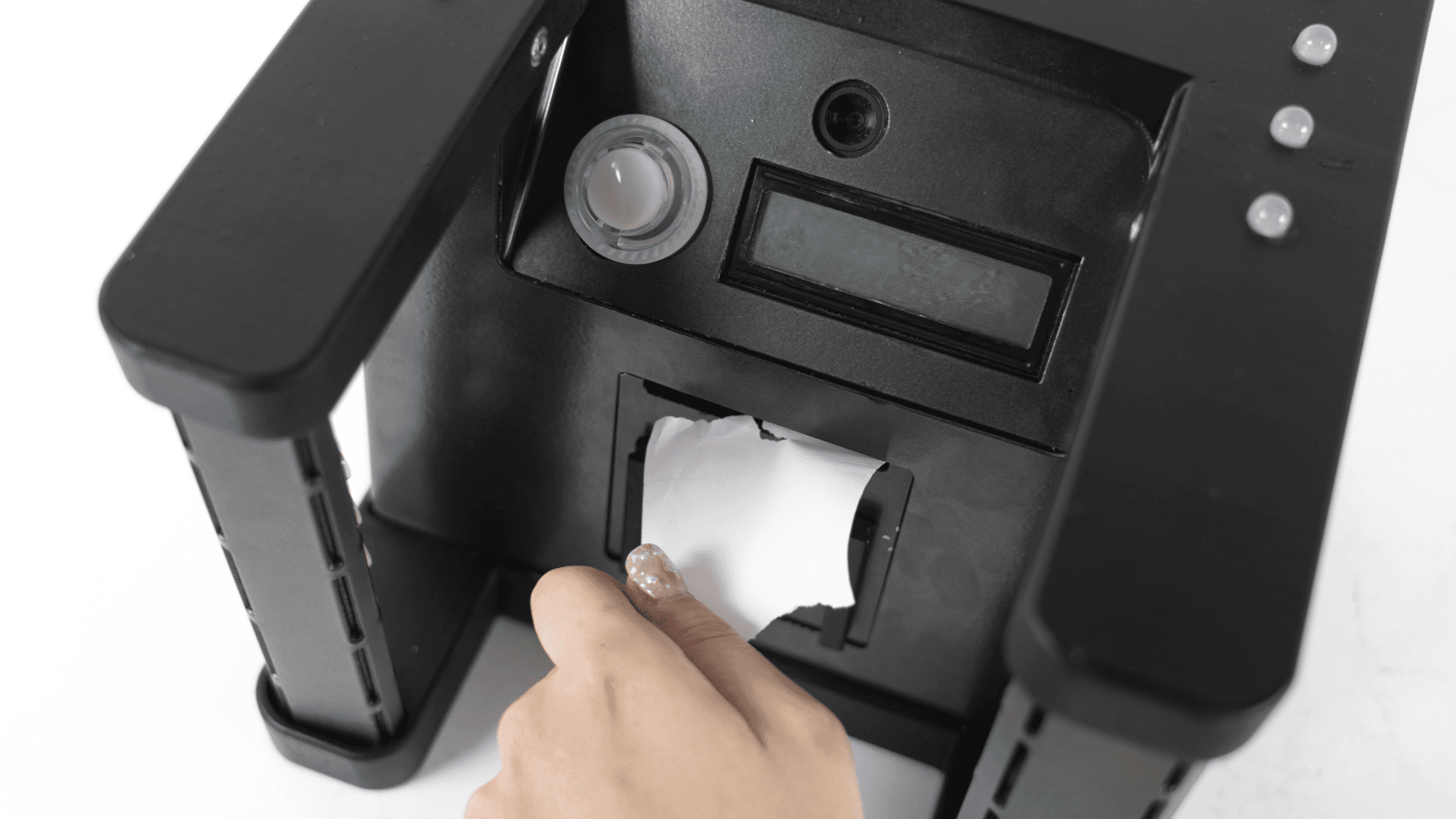
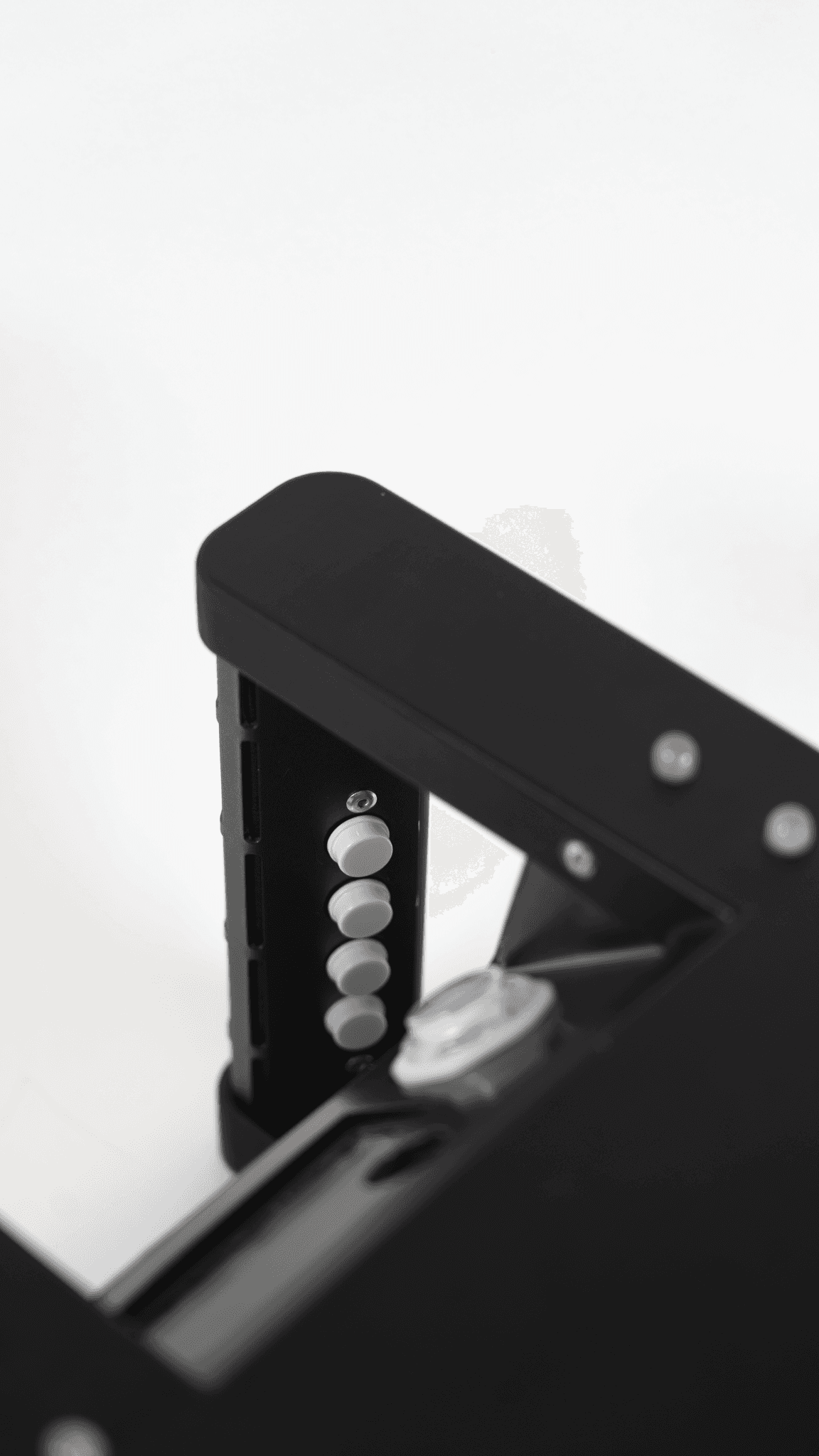
The camera flashes a pattern of LED lights every 0.5 seconds; the user must mirror these patterns using buttons on the handles. If they score well, the camera delivers a clear, thermal-printed portrait. The more patterns they miss, the more distorted their physical artifact becomes.
Made in MIT's 4.031, Objects & Interaction, instructed by Marcelo Coelho, this project is a response to the prompt of creating a playful or novel digital camera experience. In an era of instant, perfect digital photography, "Thermal Arcade" reverses expectations by requiring effort and challenging the user to earn their image.
The camera flashes a pattern of LED lights every 0.5 seconds; the user must mirror these patterns using buttons on the handles. If they score well, the camera delivers a clear, thermal-printed portrait. The more patterns they miss, the more distorted their physical artifact becomes.
[ 02 ] Design & Fabrication Process
[ 02 ] Design & Fabrication Process
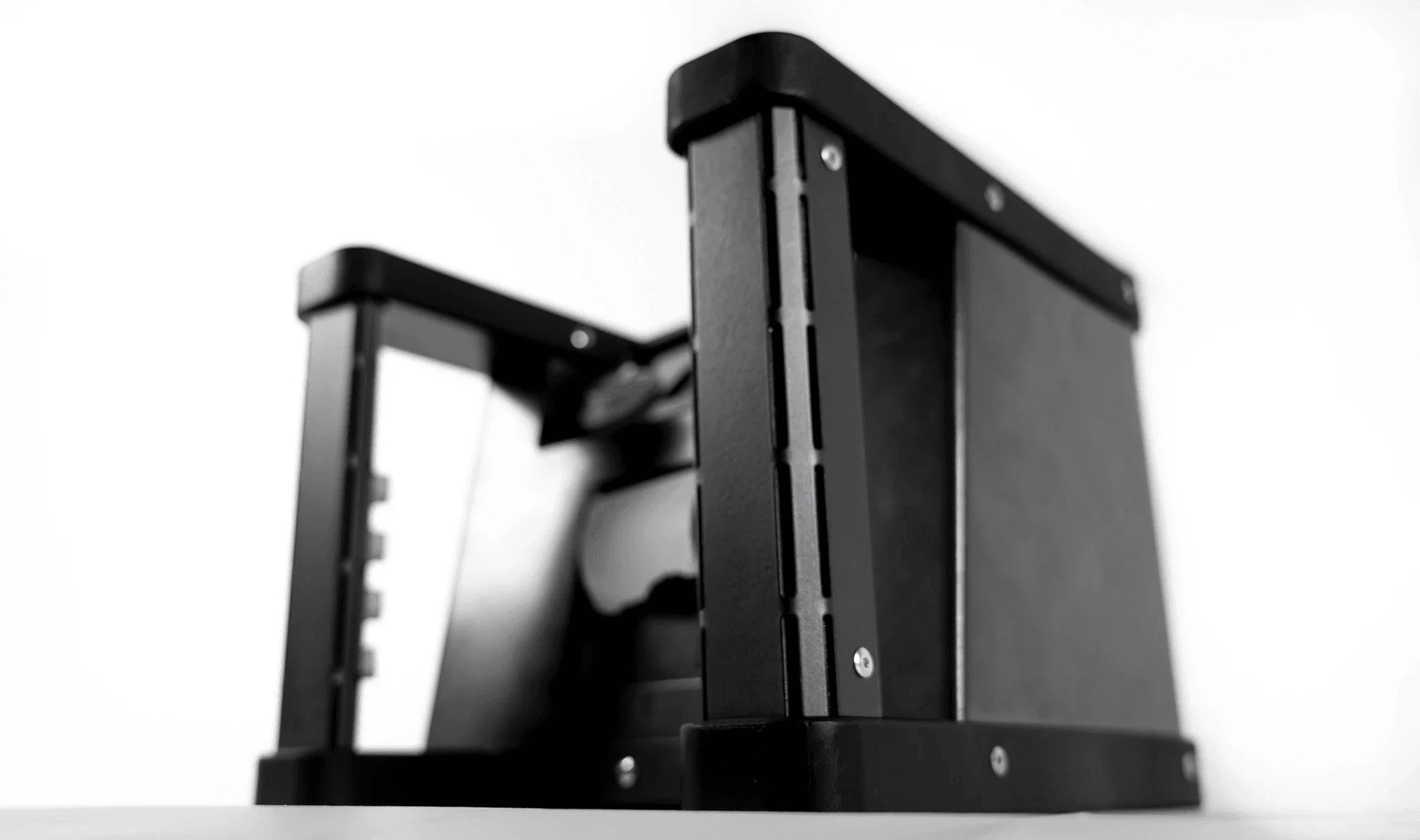
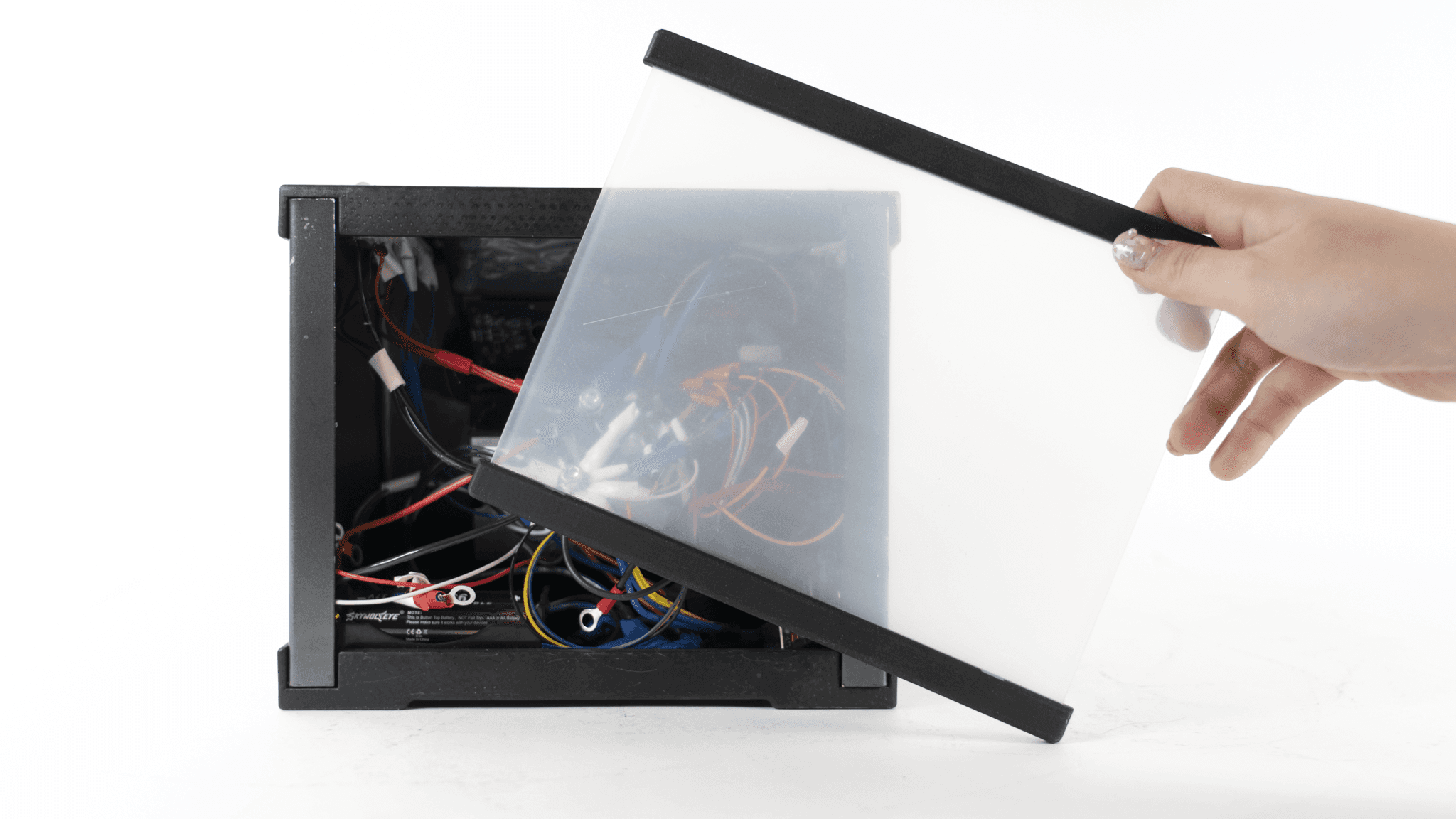
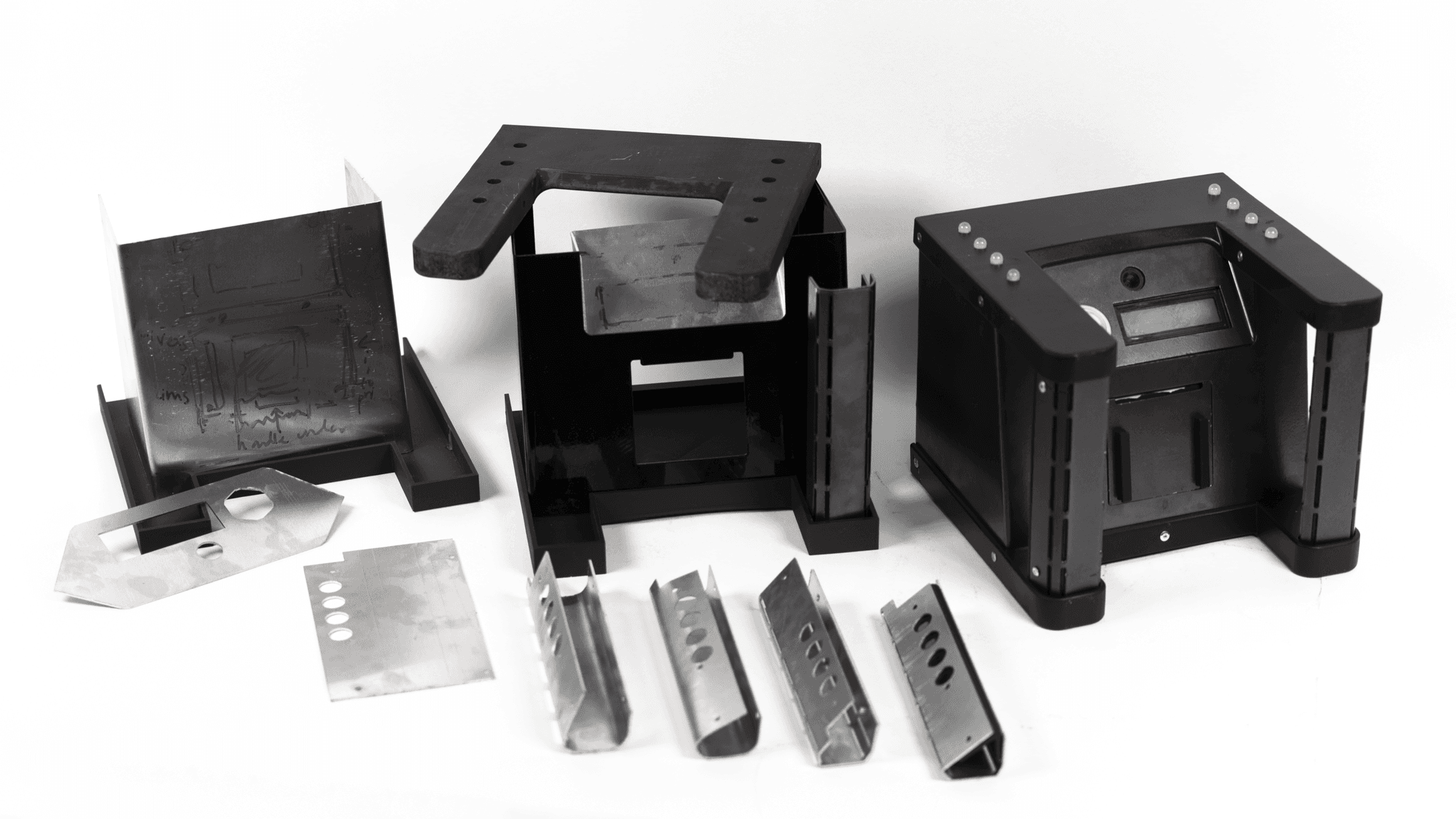
We utilized a mix of 3D Printing and metal manufacturing to construct the body. The main body was made from laser-cut sheet aluminum, shaped by a press break, powder-coated to achieve the matte black finish, and assembled with rivets.
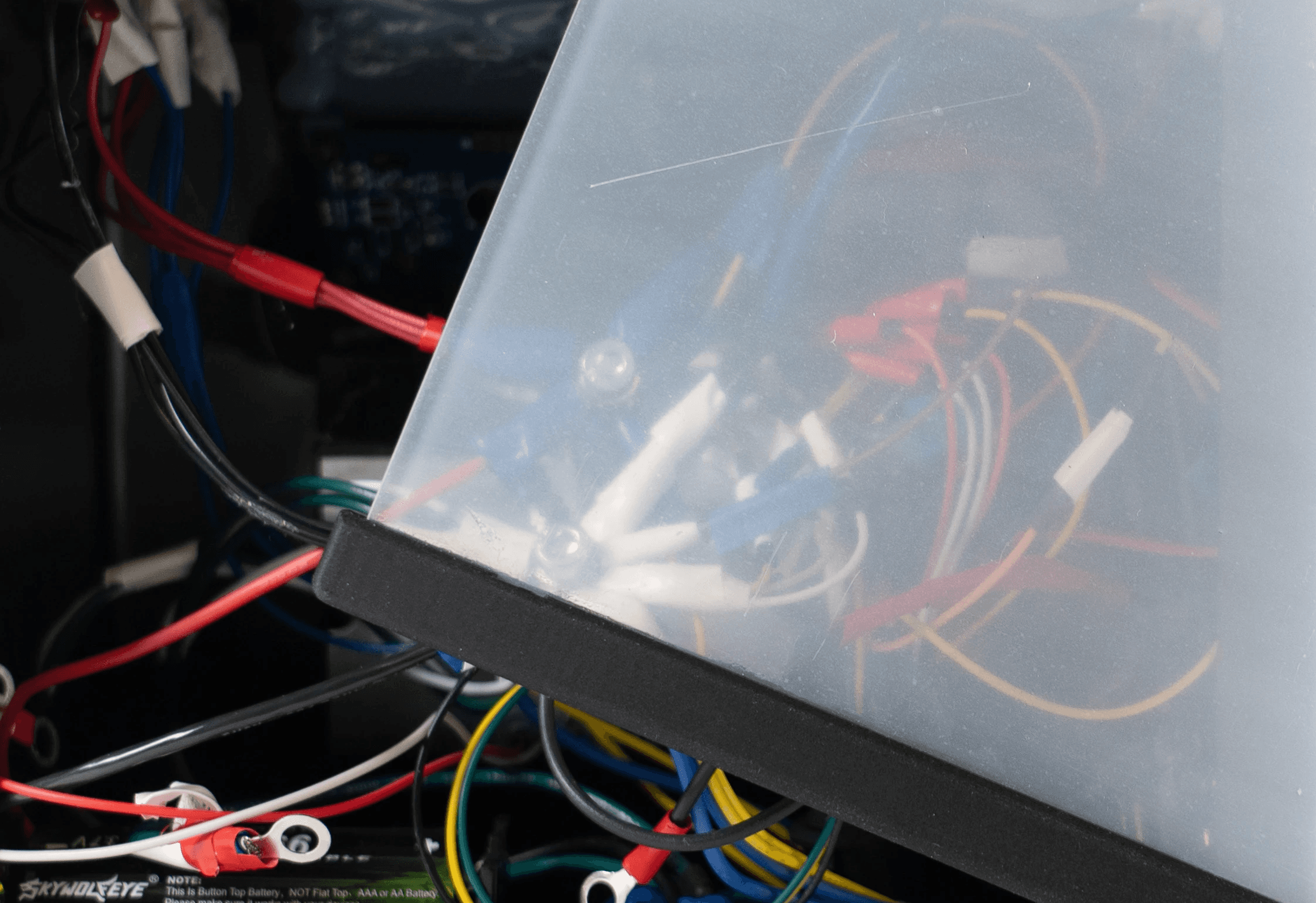
The internal components consist of a thermal printer core, an LCD screen for feedback, and custom mapped buttons and LED lights.
We utilized a mix of 3D Printing and metal manufacturing to construct the body. The main body was made from laser-cut sheet aluminum, shaped by a press break, powder-coated to achieve the matte black finish, and assembled with rivets.
The internal components consist of a thermal printer core, an LCD screen for feedback, and custom mapped buttons and LED lights.
[ 03 ] Challenges
[ 03 ] Challenges
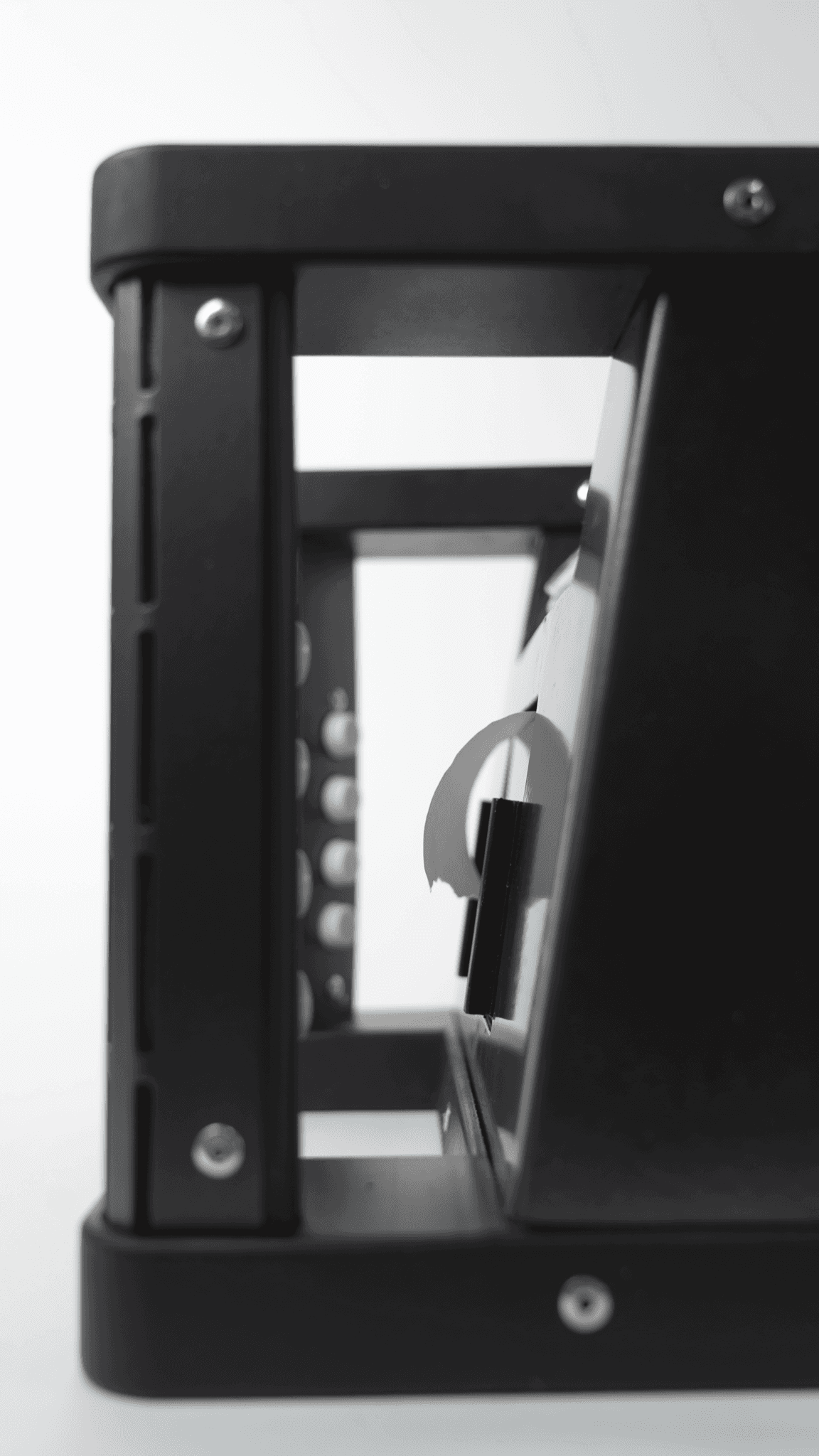
One major design challenge was the ergonomics of the handles: sheet metal is difficult to fold into the tight angles we wanted for our design.
The Problem: Standard brake presses couldn't achieve the acute angles required for the ergonomic grip without crimping the metal.
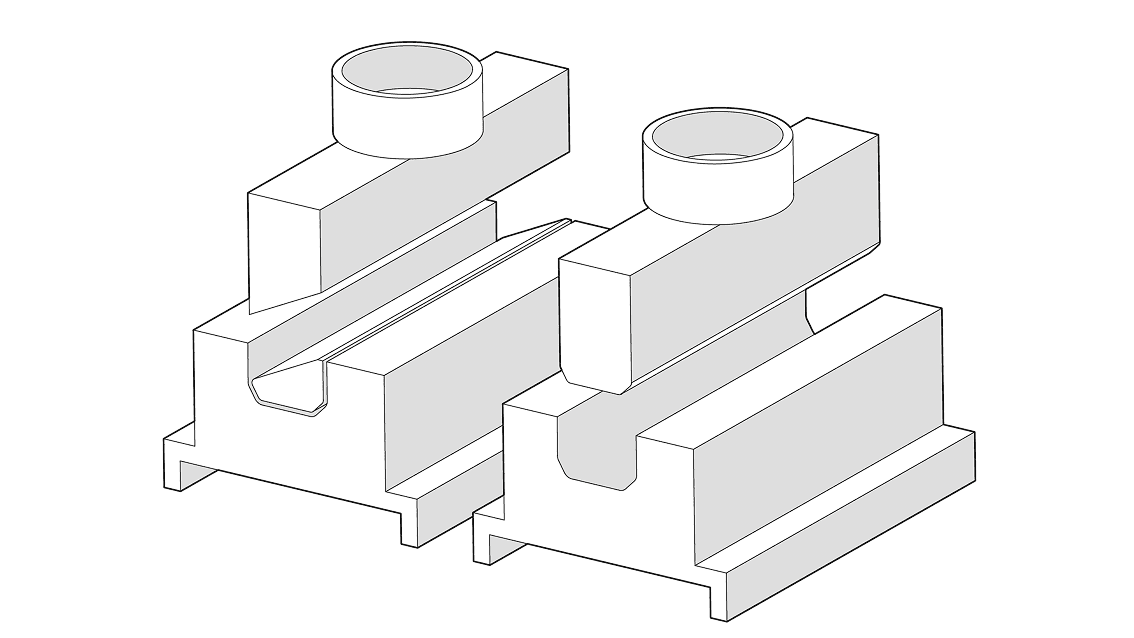
The Solution: A two-step mold system to shape the metal using pressure.
The Process: I modeled and 3D printed sturdy resin molds that fit to a pneumatic press which would gently force the aluminum into the desired concave shape.
Iteration: After many attempts, I decided to experiment with adding relief slits into the laser cut sheets to reduce material tension.
One major design challenge was the ergonomics of the handles: sheet metal is difficult to fold into the tight angles we wanted for our design.
The Problem: Standard brake presses couldn't achieve the acute angles required for the ergonomic grip without crimping the metal.
The Solution: A two-step mold system to shape the metal using pressure.
The Process: I modeled and 3D printed sturdy resin molds that fit to a pneumatic press which would gently force the aluminum into the desired concave shape.
Iteration: After many attempts, I decided to experiment with adding relief slits into the laser cut sheets to reduce material tension,
[ 04 ] Reflection
[ 04 ] Reflection
This project left me with several things to consider in my future projects:
Designing for Manufacturing: grappling with discontinuities between my CAD models and material reality is something that requires early and rapid prototyping.
Creating my own tools: I shouldn't hesitate to shape my own situation to realize my designs.
This project left me with several things to consider in my future projects:
Designing for Manufacturing: grappling with discontinuities between my CAD models and material reality is something that requires early and rapid prototyping.
Creating my own tools: I shouldn't hesitate to shape my own situation to realize my designs.
2026©All rights reserved.
phone
2026©All rights reserved.
phone